Monday, June 6, 2016

You're Invited To Join HODINKEE in London For A Celebratory Cocktail Reception

As you may have heard, we are hosting our first ever Pop-Up Shop with Harrods in London June 9th to the 12th and we couldn't be more excited. In addition to that we are hosting an evening of drinks for all you London-based folks on Tuesday. June 7th. It is our first official event in London, so we hope that you can join us and meet Arthur, Cara, and Louis.

Spaces are limited so be sure to RSVP to events@hodinkee.com to secure your spot. Upon receiving your RSVP, we will send you the location and timing details. We can't wait to meet you!

Friday, June 3, 2016

Another Record-Breaking Auction Or An Overdue Reality Check? Results And Analysis From The Phillips Hong Kong Watch Sale: Two.

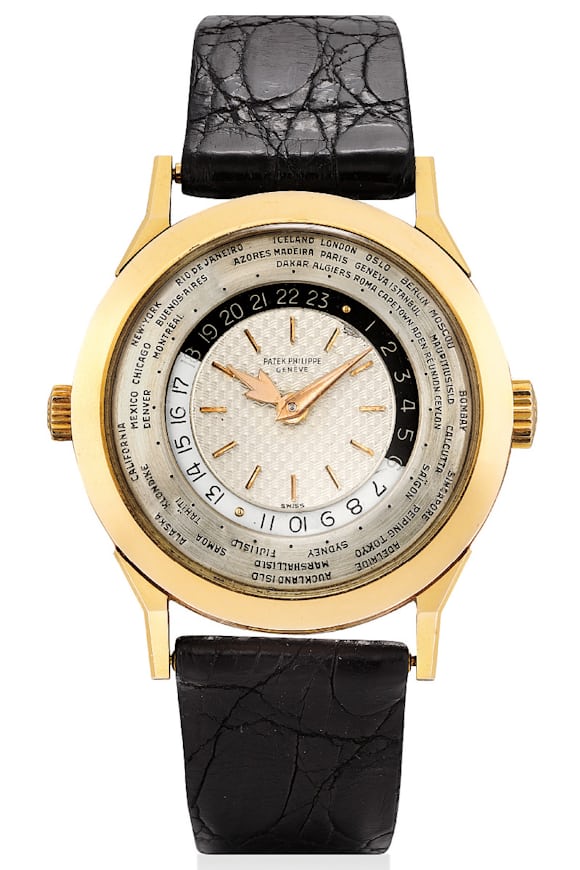
At first glance the Hong Kong Watch Sale: Two was an even greater success than the auctions Phillips held earlier this month in Geneva. The auction house sold HK$150 million worth of watches - almost 2/3 of the total achieved by the two Swiss sales combined - and broke multiple records, including the highest price ever paid for a wristwatch at auction in Asia for this third series Ref. 2499 featured in our preview of the sale, as well as the highest price ever paid for a Patek Philippe Reference 2523/1 World Time.

Lot 373 - Patek Philippe Reference 2523/1 World Time.

However, there was another figure, much less publicised by the auction house, which revealed that, while today’s market is more enthusiastic than ever, it is also much more selective. About 30% of the lots in the catalogue did not sell (115 out of 386), a far greater percentage than in the sales at the start of the month - Phillips sold 100% of their lots on opening night, during their themed stainless steel chronograph auction, and above 90% on the second evening, both extraordinary resutls.

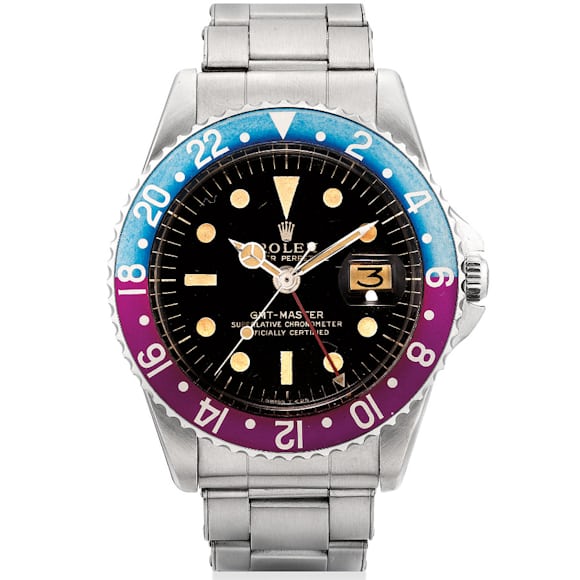
Lot 25 - Rolex GMT-Master Ref. 1675

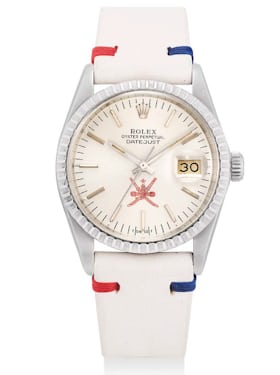
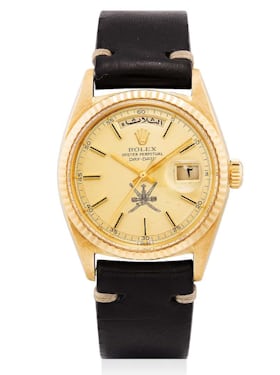
While the Hong Kong Watch Sale: Two showed that collectors will continue to bid well over the high estimate for the most meaningful watches - Daytonas, GMTs and Patek Phillipe grand complications were once again strong performers, so were watches made for the Sultanate Of Oman (Lots 30, 36, 37) - many pieces failed to receive an opening bid.

"For us this was probably the most insightful [auction] as far as the state of the market," said Paul Boutros, Head Of Americas for Watches at Phillips. "There’s been talk about Asia slowing down, but we saw incredible participation and winning bids from all over Asia, not only in Hong Kong. What we are seeing however, is that the market is going through a crisis in terms of contemporary watches, where there is more supply then there is demand."

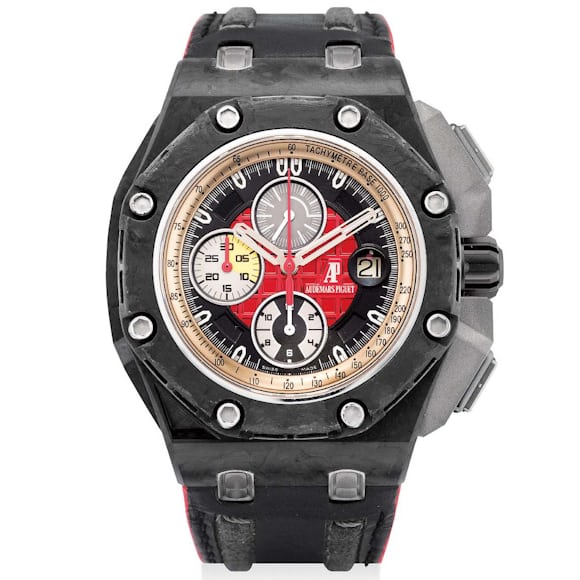
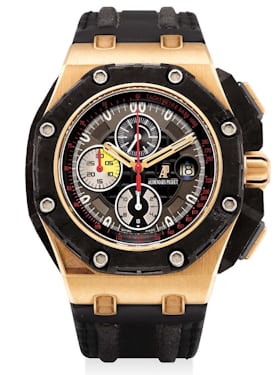
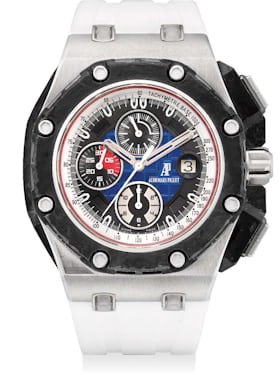
Lot 110 - Audemars Piguet "Royal Oak Offshore Grand Prix" Lot 111 - Audemars Piguet "Royal Oak Offshore Grand Prix" Lot 112 - Audemars Piguet "Royal Oak Offshore Grand Prix"

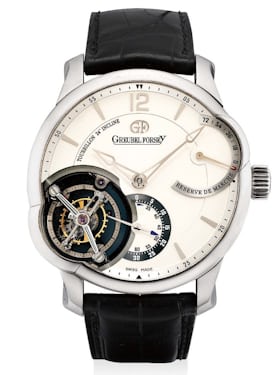
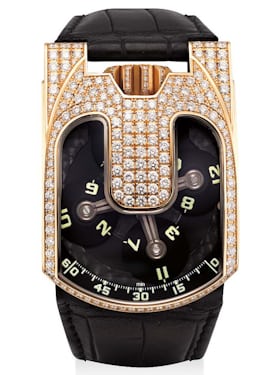
Pieces which only a few years ago fetched high prices do not generate the same excitement as they used to. This was most obvious with Audemars Piguet Offshores, which were almost all passed up, as well as well as the independents - even those with big local following such as Urwerk and Greubel Forsey.

Lot 130 - Greubel Forsey Tourbillon 24 Secondes Asymétrique. Lot 127 - Urwerk UR-103 with diamond-set case.

However, the opposite was true for unique and low production modern pieces, such as Eric Clapton's Ref. 5004, which sold well above its high estimate (Hammer price was HK$6,280,000). "Watches that are more readily available sold for less than we anticipated, while the special watches sold for much more than we thought," said Boutros.

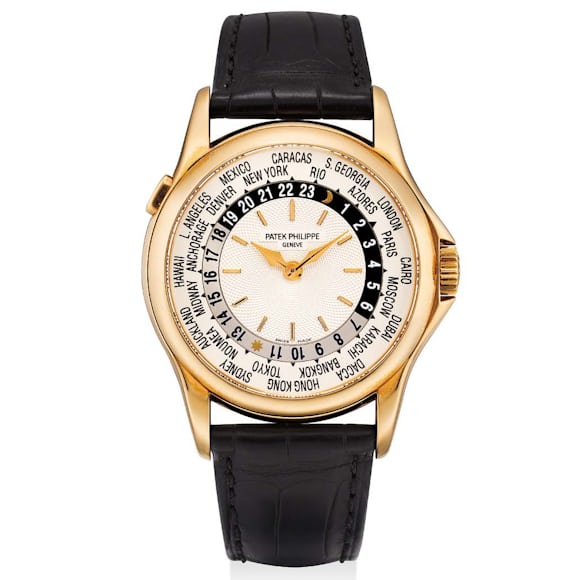
Somewhat more surprising were passes on Patek Philippe complications, including two World Timers (Lots 165 and 168) and two minute repeating perpetual calendars (Lots 171 and 386), while Day-Dates and DateJusts were also shunned for the most part. No interest was shown either for the two Paul Newman dials (Lots 228 and 231), which are so often auction favourites.

Lot 165 - Patek Phillipe Reference 5110 Worldtime. Lot 30 - Rolex DateJust made for the Sultanate of Oman. Lot 36 - Rolex Day-Date made for the Sultanate of Oman.

Several factors may explain the mixed results, including the timing of the event - collectors in Europe had to wake up at 3:30 AM to tune into the sale, while those in North America had to pull an all nighter to be able to follow it - as well as unfavorable exchange rates and additional shipping costs which added substantial costs to the final hammer price of these watches.

"When an auction house does a job correctly, it's attracting buyers from all over the world," said Boutros. "The time zone difference presents a challenge, but we still saw great participation across the globe, and vintage Rolex and Patek Philippe attracted winning bids from Europe, the US, Asia."

When asked if the proximity of the auctions had any impact on the level of participation in Hong Kong, Boutros said Phillips believes there was "minimal impact," and that clients present in Geneva also participated in the auction in Hong Kong.

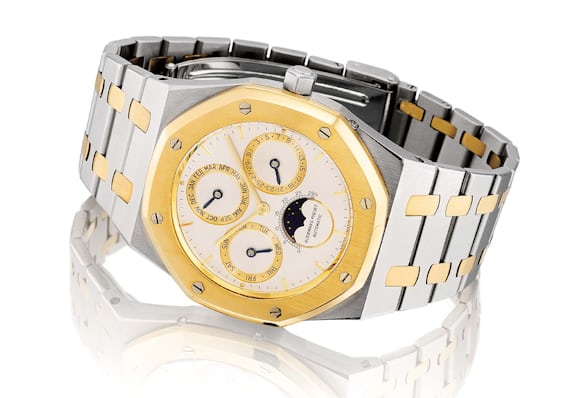
Lot 247 - Audemars Piguet Royal Oak Quantième Perpetuel Automatique.

The good news, on the collectors' side, is that the combination of factors listed above opened the door for some really interesting deals, such as a pink gold and stainless steel Patek Philippe time-only with tear-drop lugs (Lot 186) which sold for under $3,000, or the Audemars Piguet Royal Oak Quantième Perpetuel (Lot 247) which someone picked up for approximately $16,000 (before buyer's premium).  And of course, overall, it's important to note that the total over the last three auctions for Phillips is $53 million – very strong performance, market fluctuations notwithstanding.

For all the results from the auction, click here.

Introducing: The TAG Heuer Mikrograph, A 1/100th Of A Second Chronograph For Wrist, Desk, And Dashboard (Live Pics, Official Pricing, Availability)

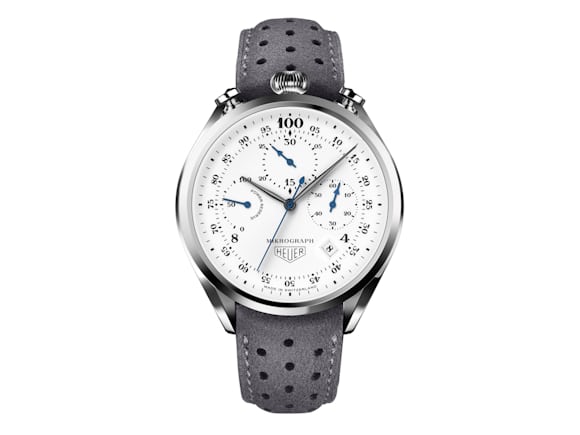
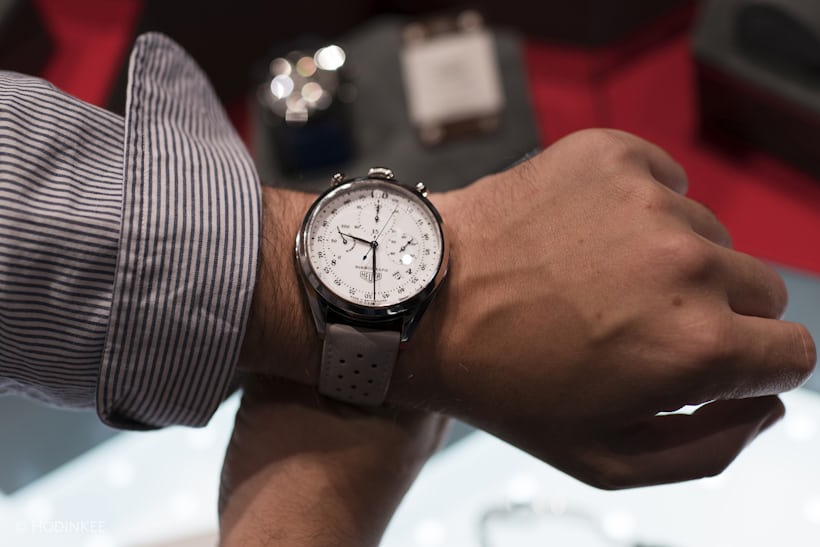
We're out in Las Vegas this weekend for the Couture Watch And Jewelry Show (follow behind the scenes here) and while much of the product on display is merchandise we've seen before, there are always a few under-the-radar gems that make a first showing here – this high-end Heuer is one such example. What we have here is new Heuer (no "TAG" anywhere on this dial!) chronograph capable of displaying up to 1/100th of a second. Now you may remember some years ago that Heuer's HH department (haute horlogerie) was producing some truly insane high speed chronographs (remember this thing? Just wild!), but since the arrival of Mr. Biver, TAG has put the focus on accessibility. This, however, brings us back to Heuer from a few years ago, and you've got to love it.

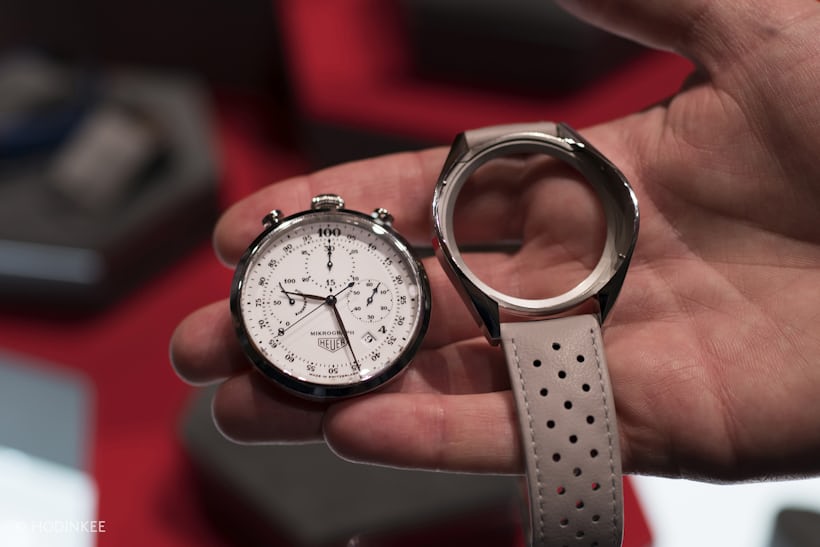
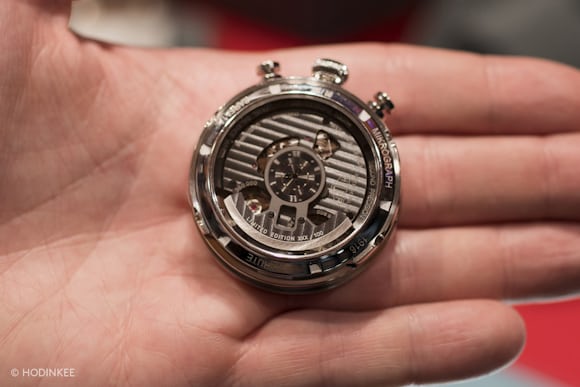
This is the TAG Heuer Automatic Mikrograph Convertible Chronograph. It is capable of measuring up to 1/100th of a second while keeping COSC accuracy. Its self-winding caliber was first seen in 2011 at Only Watch and it features two independent escapements to make it happen. To see a Mikrograph in use is just awesome – the chrono hand flies around the dial so quickly as to become almost invisible. While the movement was first launched in a piece unique and then in a $50,000 limited edition, we now have a new Mikrograph that brings us back to Heuer's roots as a motorsports timer. And it's worth remembering by the way that the first Heuer Mikrograph was made in 1916 – the world's first 1/100 second stopwatch (although it's also worth remembering that French watchmaker Louis Moinet made a 1/60 second stopwatch all the way back in the 1820s – auctioned by Christie's Geneva in 2012).

The 45 mm chronograph, which comes on a beautiful grey racing strap, can be removed from its case by a few simple turns. From there, the watch can be placed into a desk holder, or even better, mounted on your dashboard! And yes, the watch comes with cases for both, so you can simply slide the mega-chronograph into place with ease.

The movement here is a real gem, and this is a fantastic piece of work for the price – $21,000. Only 100 pieces will be made, and they will be available beginning this September. Unfortunately TAG did not have a sample of either the desktop or dashboard holders for this chronograph, but we will try to follow up to show you those as soon as possible.

Regardless, this a neat chronograph for those who may want something mechanical with them at work and in their car, and the 1/100th of a second chronograph is nothing to be scoffed at – nor is the price. Nice to see TAG still offering something like this in the collection, and while no details are available anywhere else, the pricing and availability reported here comes directly from TAG, so if you'd like one, call your AD soon.

More from TAG Heuer here.

A Week On The Wrist: The Breitling Exospace B55 Connected

When it comes to pilot’s watches, companies generally take one of two distinct approaches: nostalgic pieces that conjure the style worn by an aviator in the 1940s, '50s and '60s, or a watch that might actually be useful to a pilot in the here and now. With the watch enthusiast crowd, many of whom are reading this article right now, it’s safe to assume that the former type of pilot’s watch holds more appeal, with a mechanical movement, broad hands on a legible dial, and maybe an oversized crown and a leather strap. This genre is enjoying a boom in popularity, with pilot’s watches competing with dive watches for wrist real estate. And we are spoiled for choice – consider IWC’s rebooted Pilot’s Watch collection this year, as well as collections from Bell & Ross, Bremont, Alpina and so on. Even Rolex showed off its refreshed (and polarizing) Air King at Baselworld this year.
But Breitling is perhaps more tied to aviation than any other watch brand, and has embraced both the nostalgic pilot’s watch and the modern style equally. (And, lest we forget, they were also the first company to be granted a patent for the two-pusher chronograph, all the way back in 1933.) The Navitimer chronograph of the 1950s was undoubtedly the watch Tom Wolfe was referring to his seminal book about test pilots and astronauts,The Right Stuff – watches that, “had about two thousand calibrations on them and dials for recording everything short of the sound of enemy guns . . .  (they) were practically fraternal insignia among the pilots." (Below is a Breitling Navitimer from the collection of Phil Toledano, as seen in a recent episode of Talking Watches.)

In the 1990s, Breitling came out of bankruptcy with a new line of pilot’s watches that looked forward instead of back, with some of the first analog-digital watches aimed at pilots – with features like second time zones, multiple loud alarms, night vision-compatible displays, and even an emergency radio transmitter built in. The strategy worked, as these “modern” Breitlings became de rigueur pilots’ wrist-wear. As Jim DiMatteo, former commander of the US Navy’s Top Gun fighter training school (and Breitling USA's aviation consultant, with over 5,000 hours in aircraft like the F-16 Fighting Falcon and F-14 Tomcat) told me, “Fighter pilots always remember three things: their first solo flight, their first carrier landing, and their first Breitling."  Below is an example of perhaps the best known of the modern breed of high tech Breitlings: the Emergency, as seen in Hodinkee's Hands On from earlier this year.

To counter the challenge of the so-called “smart watch," Swiss brands have responded with different approaches, from the clip-on e-Strap from Montblanc, to the simplified activity trackers in Alpina and Frederique Constant, to the full-on Google/Android collaboration from TAG Heuer. All of these examples have one thing in common – they were outsourced (in a 21st century twist on the old watchmaking practice of etablissage) – mostly to companies in California. But for the Exospace B55 Connected, Breitling makes the proud claim that it designed and built the watch and movement “in-house,” while the phone app and connected features were all custom programmed for Breitling in Switzerland. The Exospace, in other words, is best understood as a continuation of Breitling's modern production of high tech watches pitched to working professionals, rather than watch enthusiasts per se, with features intended to be useful to working professionals (a watch designed to not interfere with night vision goggles, like the Exospace, is clearly not designed just for the average military watch lover).

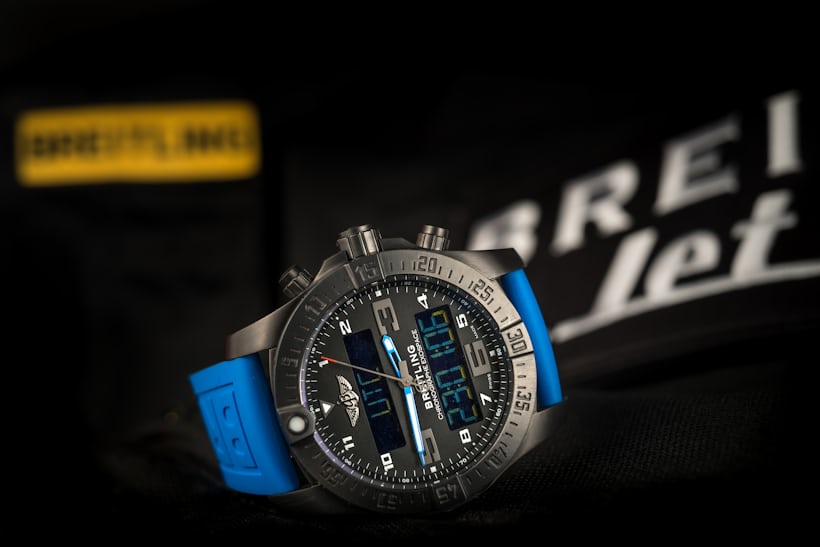
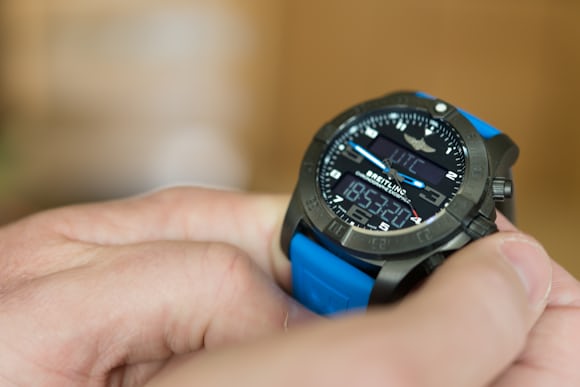
The watch case itself is made from matte finished black titanium, 46 mm in diameter and a bit over 15 mm thick. While that sounds like a monster, the short curved-down lugs and lightweight alloy made it very comfortable to wear. It’s not as broad shouldered and bulky as the similar (but “disconnected”) B50 Cockpit, and the case finishing is excellent, in typical Breitling fashion. The bidirectional engraved bezel is satisfying and easy to operate thanks to a tall profile and those trademark Breitling rider tabs, and the crown knurling is deep and grippy. Push-pieces snap with authority and the blue rubber strap is comfortable, cut to length and combined with the pushbutton deployant clasp that has a ratcheting micro-adjustment.

The overall vibe is extremely sporty, thanks to the pop of color in the strap and hands and the black finish. As a self-confessed Luddite, I was surprised at how much I enjoyed wearing this thoroughly modern watch. It has a refreshing youthfulness and tactical feel that make you want to put it on and go do stuff with it – swim, bike, run, fly – and it’s up to the task with 100 meters of water resistance.

The basic functioning of the B55 is similar to other Breitling “ana-digi” watches, combining traditional three-hand time-telling with two windows that display other information digitally. All functions are controlled on the watch via the crown, pushing, pulling, or spinning it to move through functions and select values. The push-pieces, which look like a chronograph’s start/stop and reset buttons, are actually used to scroll between submenus as well as activate some of the functions like the stopwatch or countdown timer. To facilitate readoff of the digital display, a double push of the crown “parks” the hands at 9 and 3 to keep them out of the way. You can synchronize the hands to the digital display, down to the second; in a nod to its airborne target audience, to set the time, you first set Universal Time Coordinated (or GMT), the international standard for air traffic communications, and then set the local time using your location’s offset.

To allow for readoff of the digital display in the dark, the display is backlit and glows a bright blue with the push of the crown, staying on for whatever length of time you set. In addition, the backlighting is activated automatically when the watch is tilted on your wrist, a feature that was both fun and a bit maddening. Though you can set the sensitivity of this function (or even turn it off) I often caught a distracting glimpse of my wrist lighting up while driving at night, in a movie theater, or in bed (yeah, I’m one of those guys). And in case you’re wondering, the digital display is night vision goggle compatible (meaning that the display is designed to prevent over-amplification of its illumination by NVGs, which could dangerously impair a pilot's vision).

Powering the Exospace B55 Connected is Breitling’s own movement, calibre B55. It is one of the company’s so-called SuperQuartz movements; thermocompensated to account for temperature swings (the frequency of quartz crystals is sensitive to temperature changes). Breitling submits the movement to COSC for chronometer testing and certification and thus it keeps predictably excellent time; the COSC standard for a quartz chronometer watch is +/- 0.07 sec/day. In addition to time and date, the watch has a long list of functions, some more useful than others (at least, to non-pilots). Here’s a quick look.
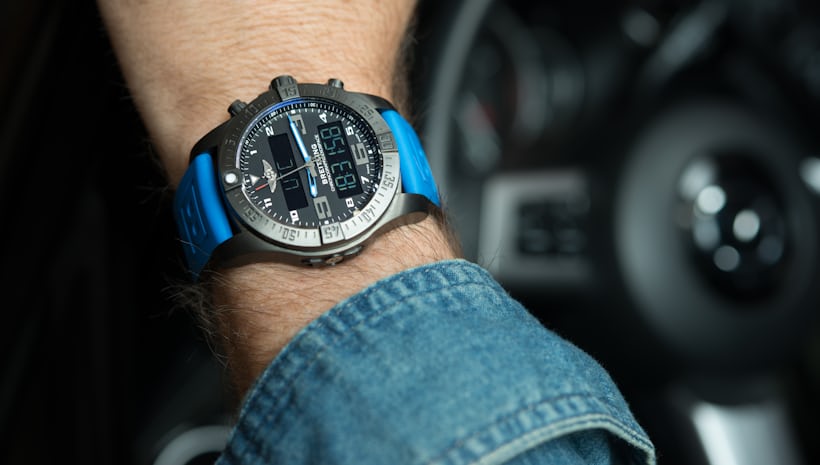
Two time zones can be displayed, one on the digital display and one with the hands, and the two can be swapped with a click of a push-piece. UTC time is also tracked and can be displayed on the digital display at any time. There is a digital flyback chronograph that allows for 1/100th of a second timing and which will store up to 50 intermediate lap times. A nifty tachymeter function will let you track average speed over a set distance, complete with unit conversion for going from kilometers to miles per hour. You could do that with the Navitimer’s slide rule bezel, but it would take longer and require math skills well beyond my own.

The “Chrono Flight” function is designed to record overall flight times by not only starting at takeoff and stopping at touchdown but also then saving the times (in UTC) with the airport codes you associate with them. A countdown/up function adds a further wrinkle by counting down to a start time and then up from there, useful as a “mission timer” – but it could also be used as a regatta timer for a yacht racing.
The countdown timer can be set for up to 100 hours and will beep in the last 20 seconds and then again as a reminder if you don’t shut it off within a minute. Speaking of the beeping, the B55 has a very loud alarm – perhaps not as loud as the now discontinued Breitling B-1 or the OMEGA Speedmaster X-33, which use special resonating casebacks, but it will get your attention, in addition to vibrating on your wrist. This notification also works for the daily alarms you can set (up to seven, and if you actually need seven daily alarms pre-set you have my sympathy). I used the alarm to wake up a few mornings and, even on my wrist under blankets, it was plenty loud enough to rouse me from sleep.

The analog-digital formula of the B55 is one that Breitling has used going back to the early Aerospace and Emergency watches of the early 1990s, and to a certain extent, to the Chronosport-based Pluton of the '80s. While the design may seem a bit dated now, especially compared to the customizable hi-res dial of, say, the TAG Heuer Connected, it still does the job well, conveying data clearly while retaining a certain design language that is distinctly Breitling. It also will be instantly familiar to anyone that has used an ana-digi Breitling in the past two decades, and the watch can be used entirely on its own if you want with all of the functions I listed above. But the “connected” part of the B55 and its phone app are what sets the watch apart, and seems a logical addition to an already useful watch.
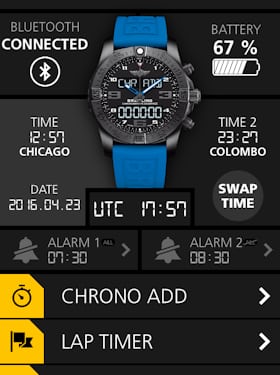
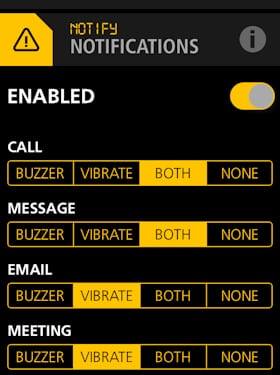
Exospace app home screen. Notifications set up.

The B55 app, which can be installed on an Apple or Android smartphone, is used to view, set and log functions and data from the watch. It is an intuitive app, well designed for integration with the watch. The main screen has the most important information upfront – battery percentage, Bluetooth status, time zones (UTC, local and home), as well as any alarms that are active. Then a series of icons allows for quick access to the other functions of the watch, where you can view stored flight times, timer and chronograph records, and a list of notifications. A separate menu is used to set the backlight tilt and length, how and how long you can park the hands, alarm tones, and to synchronize the hands to the digital display.

Since your phone’s time is maintained via the GPS satellite network to an atomic time signal, by keeping the watch synchronized to your phone, you’re effectively getting atomic-accurate timekeeping on your wrist as well. Your local and home times are set from a long list of world airport codes and can be swapped with the push of a button on the app so that when you sync the watch, the change occurs there as well. It’s a small but endlessly fun pleasure to press a button on the phone and see the hands of the watch move instantly.
Of course, as the Exospace is a Bluetooth connected watch, you also have the ability to receive call, calendar and text notifications. Via the app, you can program how you are notified, through tones, vibration or both, and the watch’s top digital display simply shows the word, “MESSAGE” or “CALL.” There is no voice recognition or reading of text messages on the watch; its simple digital display isn’t designed for that.

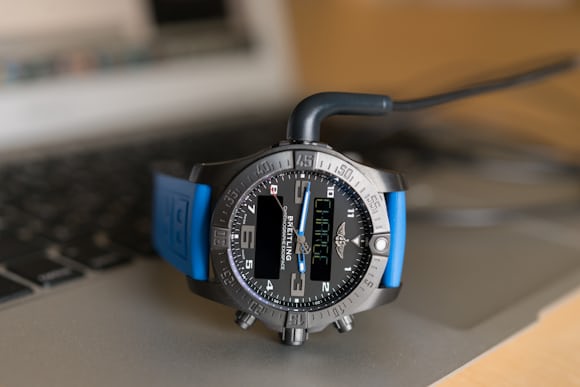
As you might expect, the Exospace B55 Connected is a power hungry watch, but not as much as you’d think. While the TAG Heuer Connected typically needs to be topped off every day or two, this Breitling can go up to two months on a single charge, depending on how many of its features you’re using, particularly the backlit display and Bluetooth interaction. To recharge it, a small magnetic coupling on the watch’s left flank connects to a cable which can be plugged into a wall outlet or the USB port on a computer. For the two weeks I had the watch, it never dipped below 60% battery power, in fairly regular use.
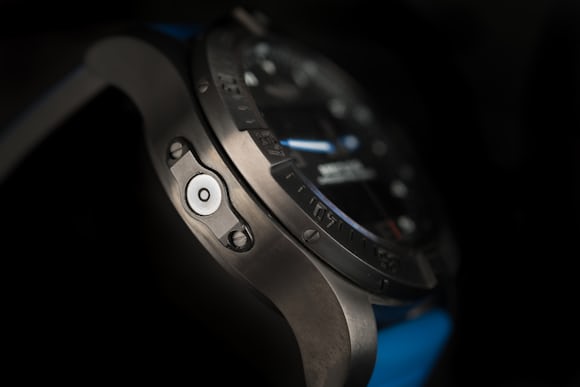
Finally, there's the matter of price, which may be the B55’s only glaring “weakness.” At an eye-watering $8,900, it is priced well above all other so-called “smart” or connected watches, and more than any of Breitling’s other analog-digital offerings, with the exception of the dual-transmitter-equipped Emergency. It is also more than many of Breitling’s mechanical chronometers. Whether it is worth it is a rhetorical question those of us who follow the watch industry often hear but seldom answer. I will say that it is an extremely well made watch through and through, from sculpted case to feature-laden movement to its companion phone app. It was very satisfying to wear, fun, and useful. Granted I was only borrowing it for a week or two, not plunking down my hard earned cash to own it, but then again, I’m also not a time zone hopping professional pilot who needs one tough watch that offers a slew of cockpit-specific features, in addition to standard connected device notifications.

As watch enthusiasts, we are often quick to dismiss quartz watches, anything digital, and most certainly smartwatches, as mere gadgets that don’t deserve to be considered side by side with the timepieces more often seen on HODINKEE. But when you consider that watchmaking has traditionally often been about pushing forward to be the best possible instruments for specific functions, you're better able to view a watch like the Exospace B55 Connected as one more hash mark on that continuum, just as a slide rule-equipped Navitimer was a state of the art pilot’s watch in 1954. I’ve long admired Breitling for pursuing both paths in its collection, maintaining the historical pieces such as the Transocean and the Navitimer while continuing to build watches for modern pilots too. Will a new generation of luxury smart, connected watches with complications driven by apps ever be revered or coveted like traditional watches? Only time will tell.

More information about the Exospace B55 Connected can be found on Breitling’s website.

Bring a Loupe: Great Classics For Sale From A Zenith El Primero To A Rolex Submariner With Tiffany Dial

This week, Bring A Loupe presents to you some truly iconic watches. We start with a Rolex Submariner, and then move on to the ground-breaking Zenith El Primero A386. Expect to also find a rare Breitling Cosmonaute in yellow gold, and a dressy Patek Philippe Calatrava in stainless steel. Yes, this is this kind of selection you will find today – a lineup of some classics that are classics for a reason.

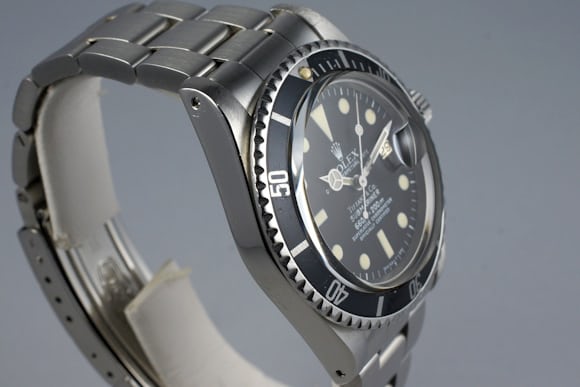
A Rolex Submariner Reference 1680, With Tiffany-Signed Dial

Rolex Submariner 1680 Tiffany

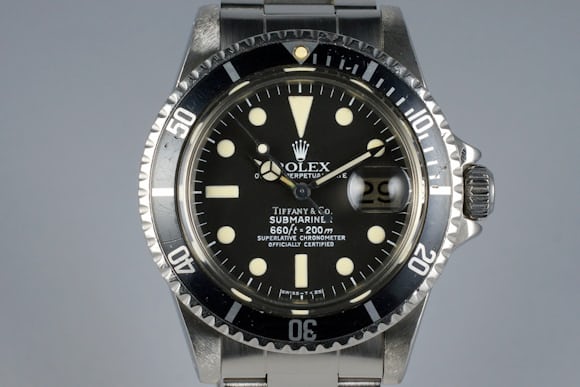
The reference 1680 was the first Submariner to offer the date, more than 15 years after the launch of this iconic diving watch. It is obviously a practical complication that Rolex delivered in the most legible way thanks to their usual "cyclops", fixed on the top hat plexiglass that is only found on this reference. This gives the 1680 a really great angular profile, but this watch here has a little something more that changes everything. The Tiffany & Co line on the dial is highly coveted on vintage Rolexes. Rolex discontinued the co-branding with Tiffany in the early 1990s (though it continues to this day with Patek Philippe). In addition, this watch bears the Tiffany & Co. serial number, manually engraved under the lower right lug.  

Rolex Submariner 1680 Top hat plexi

The dealer HQ Milton is offering this rare reference 1680 for $26,550 here.

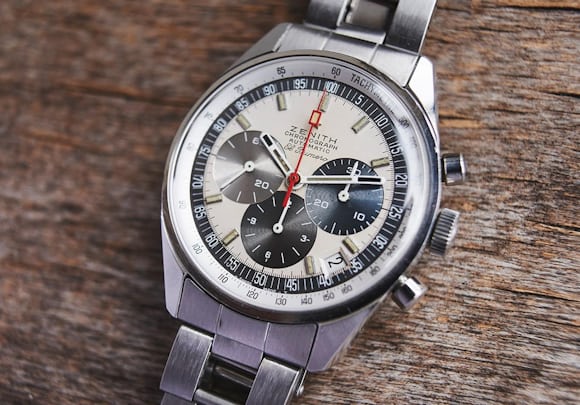
A Zenith El Primero Reference A386, With Original Ladder Bracelet

Zenith El Primero Reference A386

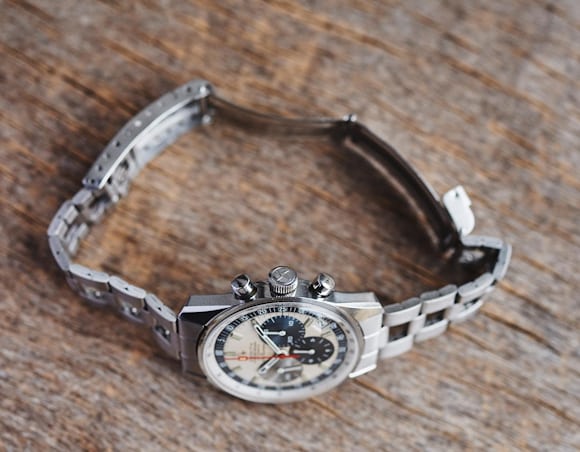
A single glance is enough to understand the fascination around the Zenith A386: the tri-color register, the 38mm case and the weirdly attractive Gay Freres ladder-bracelet make a killer mix. And it is not only about looks – the reference A386 was one of the first Zeniths to carry the ground-breaking El Primero caliber. In 1969, this was one of the first automatic chronograph movements ever offered, alongside the Seiko 6139 and the Chronomatic movement (the latter born out of a technical collaboration between Heuer, Breitling and Hamilton). The debate still rages on about who was really first, but in any case, the El Primero was the only one to boast a 36,000 vph high-beat frequency. The watch here also stands out thanks to its outstanding condition, with an unpolished case, nicely patinated lume, and all original parts.

Zenith A386 ladder

The German dealer Rare Birds is offering this revolutionary chrono for 16,500 Euros or around $18,500 here.

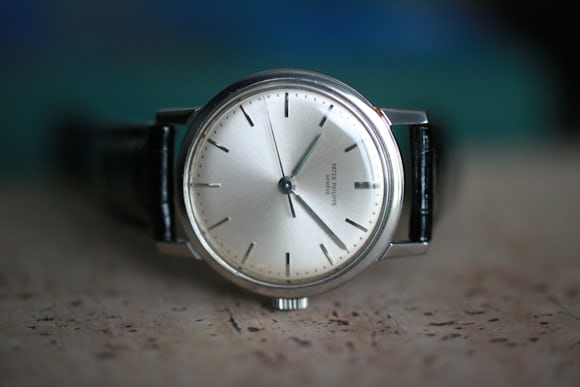
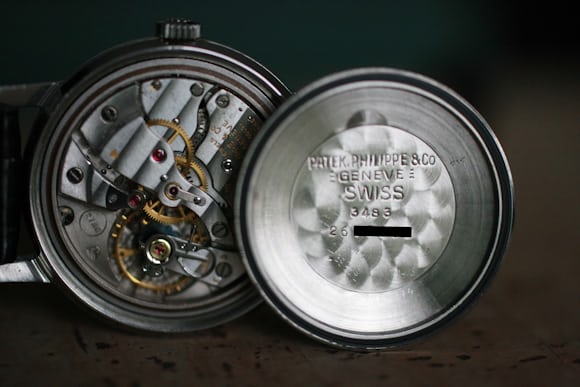
Patek Philippe Calatrava Reference 3483, With A Stainless Steel Case

Patek Philippe Calatrava 3483

The reference 96 was the first Calatrava released in the early 1930s, and it changed forever the design of  dress watches. With vintage Calatravas, the stainless steel cases are by far the rarest and most coveted, hence the attraction of the rare references that only came cased in that material, such as the present reference 3483, manufactured in 1967. It does have everything you could wish for a dress watch (just look at the stunning brushed dial and the insane minute track!), and yet, it feels so modern at the same time. It might be the shape of the lugs or the sweep center second but there is definitely something that makes this 1960s watch feels very current and classy.

Patek Philippe 3483 Caliber 27-SC

You can find this dressy Patek offered here; it comes with an Extract of the Archives.

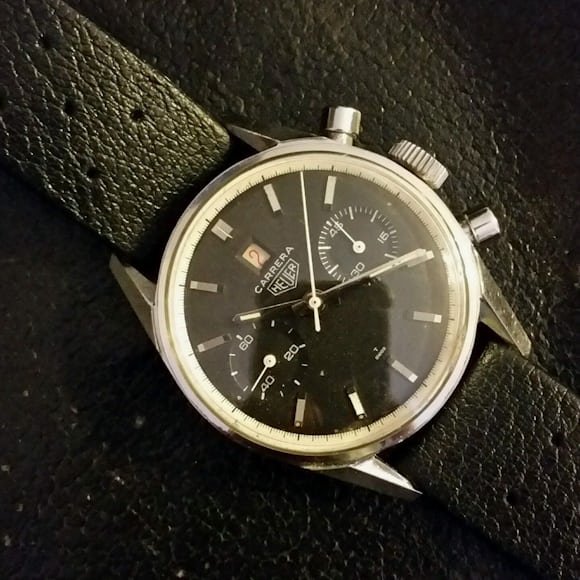
Heuer Carrera Dato 45 Reference 3147N, With Date At 12 O'Clock

Heuer Dato 3147N

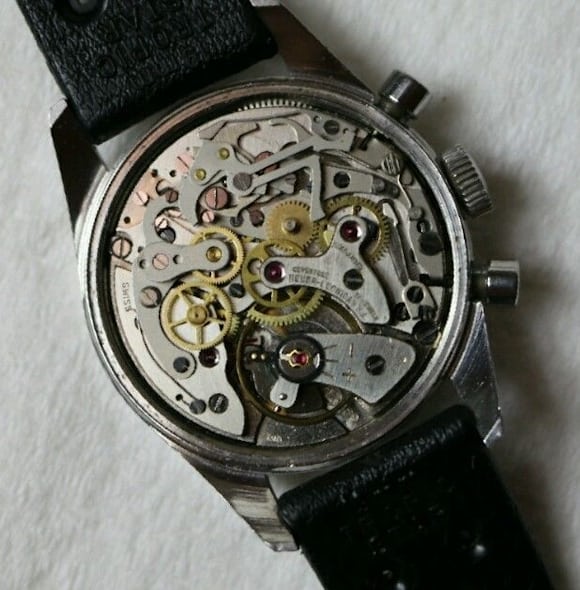
The beveled lugs tell you right away that you are looking at a Heuer Carrera, but the reference 3147 Dato comes with a twist (pretty obvious from its name). The 1st execution Dato presents a date-window at 12 o'clock in order to not upset the balance of the dial and the focus on its chronograph abilities. The date disc is red in order to contrast with the black dial, a clever touch that really makes this Carrera; interestingly the date was later moved to 9 o'clock in the 2nd execution, so the original placement might have had some opponents at the time. As you would expect, the chronograph does not come with a Valjoux caliber, but rather, the trusted the Landeron 189 chronograph movement to provide the date.
Heuer Dato Landeron 189

This Dato 45 is offered on eBay here; at the time of publishing, bidding was still below $4,000.

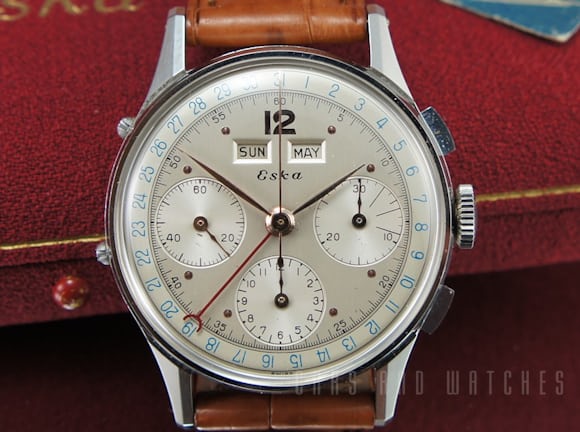
Eska Triple Calendar And Chronograph Watch

Eska Triple Calendar

Eska might not be the most well known brand, but this is a beautiful example of a wonderful vintage chronograph nonetheless. First, the condition is truly remarkable, NOS as it is called, with a very sharp case and a perfect dial. Then, this watch offers the complications we love, a chronograph of course, but also a triple calendar with two upper guichets, in a design reminiscent of the Rolex Dato-Compax. The movement powering those complications is the workhorse Valjoux 72C, derived from the ubiquitous Valjoux 72.

Eska Valjoux 72C

The dealer Cars And Watches listed this minty Eska for 4,900 Euros or around $5,500 here.
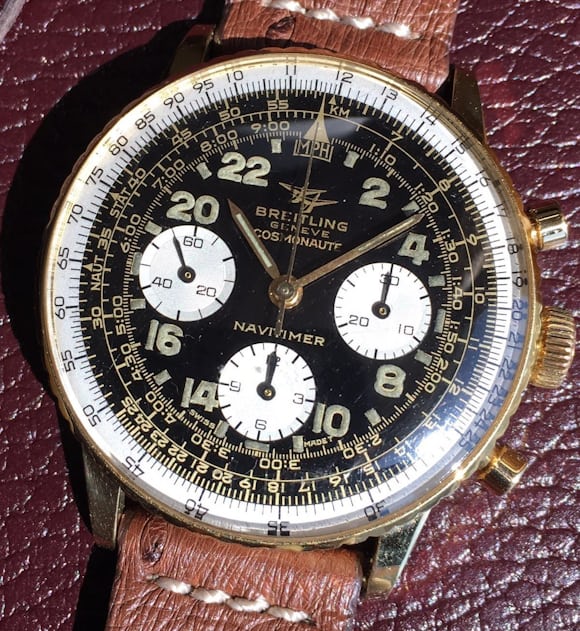
Breitling Cosmonaute Reference 809, With Yellow Gold Case

Breitling Cosmonaute Reference 809 Yellow gold

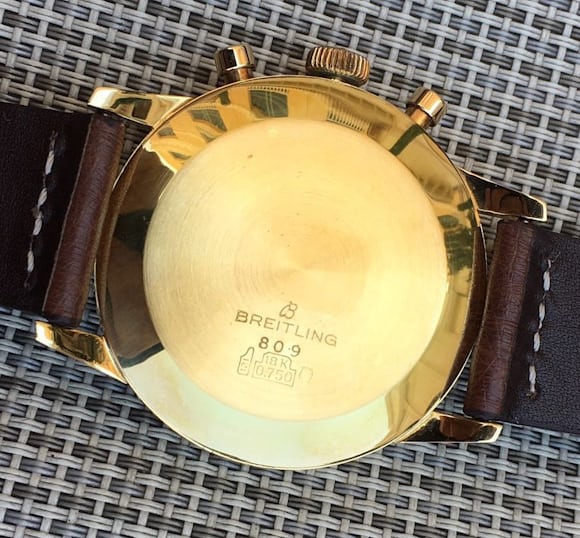
The Cosmonaute name of this Breitling is not here only for the show, it was actually worn by the astronaut Scott Carpenter onboard space capsule Aurora 7. Legend has it, the astronaut and military test pilot personally requested to Breitling that his favorite model, the Navitimer, be offered a 24-hour dial to distinguish between day and night time, which lead to the launch of the Cosmonaute in 1961. As you know the Breitling did not eventually make it through the NASA selection process for an official NASA service watch; it was not ever tested as it lacked water-resistance, resulting in Scott Carpenter's personal example not surviving its landing in the Atlantic. It is nonetheless an extraordinarily good-looking tool watch, with a splendid gilt dial. And the rarity of the reference 809 in 18K gold should be emphasized as well.

Breitling Cosmonaute 809 yellow gold

You can find this extremely rare and well preserved Breitling Cosmomaute offered here.

Thursday, June 2, 2016

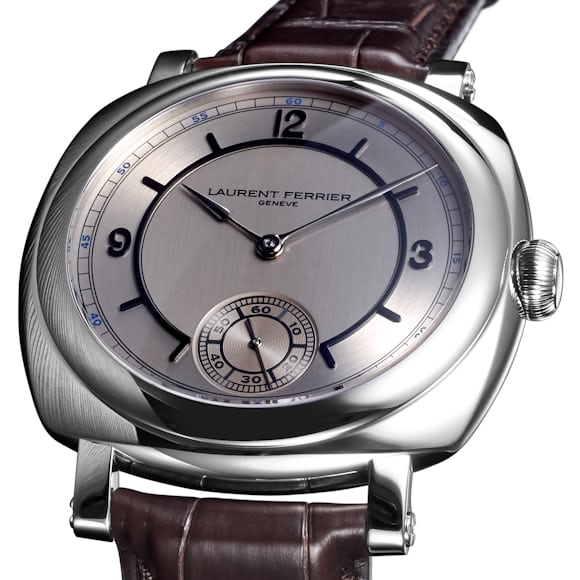
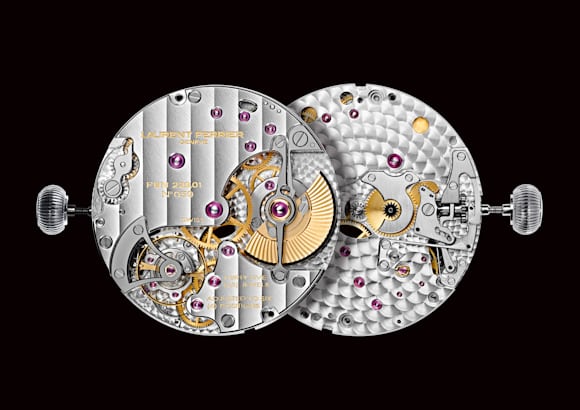
Introducing: The Laurent Ferrier Galet Square Vintage 1 Limited Edition For Swiss FineTiming

Laurent Ferrier might just be producing the most beautiful dials in the world right now – with true multi-tones and sectors like you'd find in the 1930s and 40s. The first time we saw one was on the Only Watch piece (now resting peacefully in a well-known California collection) and then at SIHH, we saw some vintage inspired luminous sector dials that were true fan favorites. Today we have a new limited edition for Chicago retailer Swiss FineTiming and it's a looker.

The dial is marked out by a black nickel gold chapter ring featuring curved markers with a nod towards the brand’s soon to be iconic drop-shaped hour-markers. The Arabic markers at 9, 12, and 3 are also black nickel gold while the outer rail features blue painted Arabic numbers. The case of this new limited edition features a new lug design, with a side decoration consisting of a polished Swiss cross as well (a white cross on a red background has been a symbol of Switzerland since the medieval Old Swiss Confederacy). Inside you have the same beautiful FBN Calibre 229.01 with micro-rotor and natural escapement.

Over all we have a new and beautiful limited edition piece for the American market – the case will be steel and in only ten pieces – and all will be available at Chicago's Swiss FineTiming. Contact them here if you're interested.

A Week On The Wrist: The Rolex Sky-Dweller, The Most Complicated Modern Rolex

The Rolex Sky-Dweller is exactly the kind of watch you usually don't think of when you think of Rolex: a complicated watch, and moreover, one with a very unusual implementation of several complications. For that reason, it's not very often discussed by Rolex fans, but in typical Rolex fashion it is, as it turns out, much more interesting than you might think from the niche in which it sits in the Rolex lineup. Available only in precious metals, the Sky-Dweller was introduced in 2012 and there was, at the time, a lot of buzz about it; but as one of the most expensive (non-jewelry) Rolexes, it's been more visible (when it's been visible at all) as a luxury watch rather than as a tool watch.

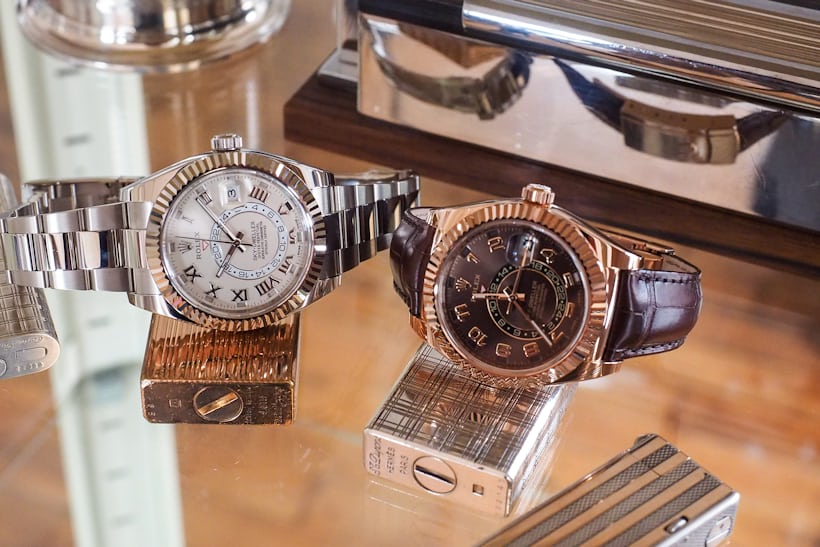
Rolex Sky-Dweller

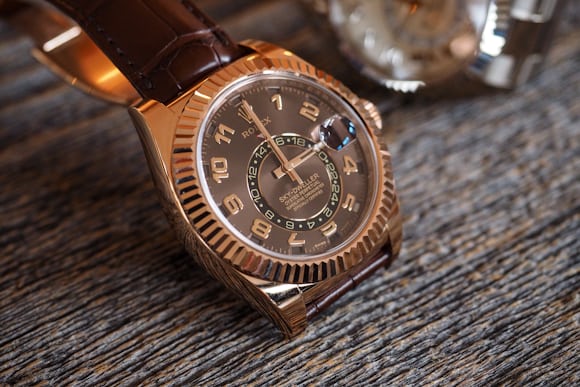
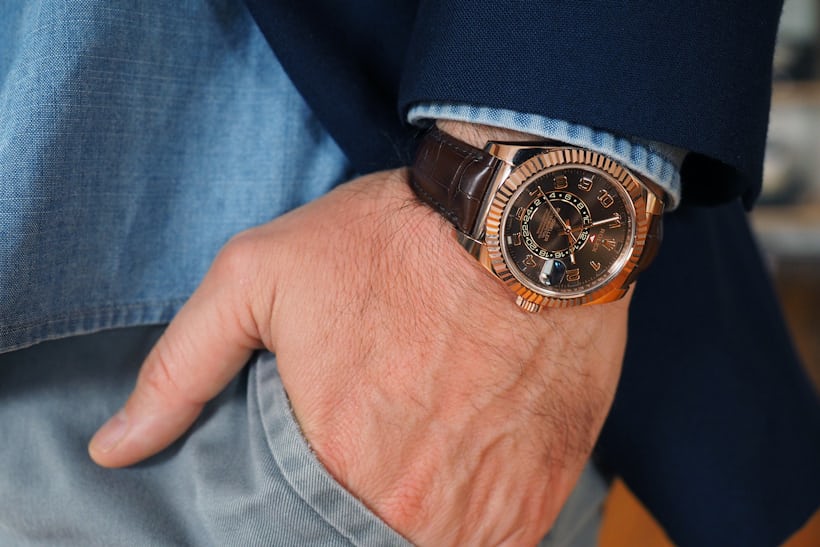
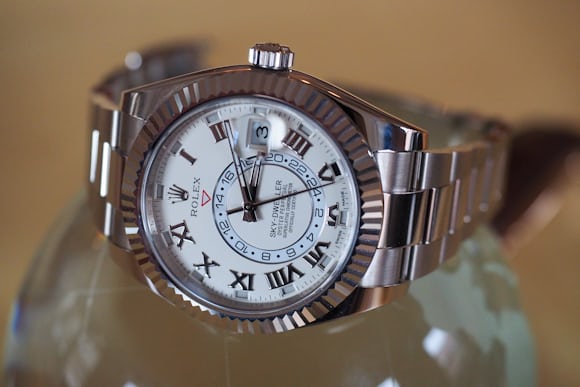
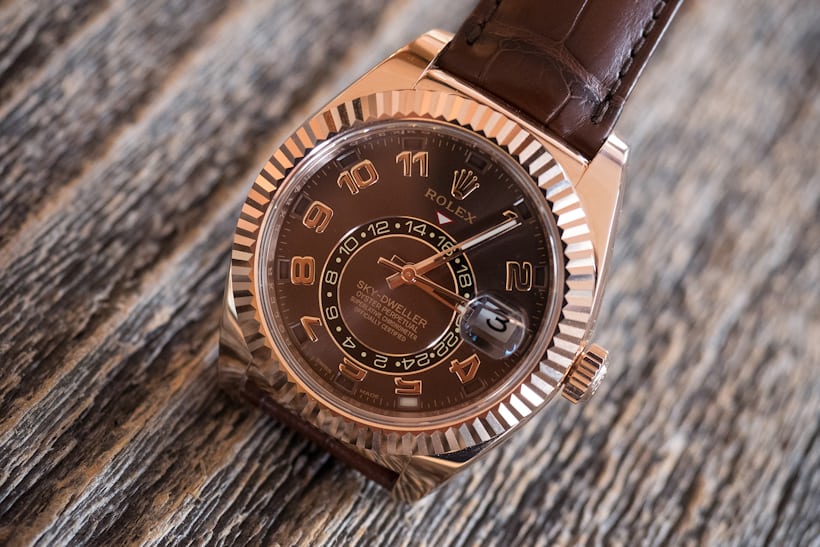
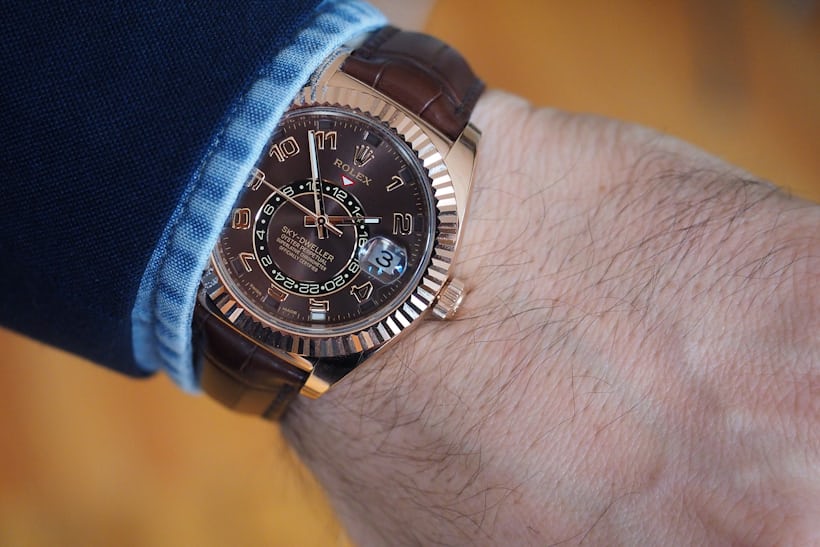
There's no doubt from the minute you pick one up that the Sky-Dweller is very much a statement piece; it's big (42 mm x 14.1 mm) and very boldly styled, with a light-gathering fluted bezel and enough reflective surfaces to ensure that pretty much no matter how the light hits it, it's going to dazzle the eye. An unobtrusive tool watch, this is not – certainly not in terms of style. We wore the Everose-gold version of the watch for this installment of A Week On The Wrist, although we also had the white-gold version (on a white-gold bracelet) for comparison purposes as well, and they're both pretty flashy watches; there's just no getting around it. However, that doesn't necessarily mean they come across as gauche, either, and what you notice right away, as is usually the case with Rolex, is that everything's extremely well done. Dial furniture, casework, hands, overall fit and finish – everything is absolutely immaculate and really sets a standard for build quality and quality of execution in luxury watchmaking. Yes, you expect that at this price point, and yes, you expect it from Rolex, but given how seldom luxury watches really deliver in this respect it's nice to see anyway.

The fact that the Sky-Dweller is so well made goes a long way toward saving it from ostentation, and I think that's because the very high quality seems an end in itself, as well as a manifestation of a deeper commitment to quality for its own sake. It's a very characteristically Swiss approach to luxury, I think; you don't necessarily get originality and artistry the way you do from the French or Italian approaches but you do get, at best, meticulous attention to detail in an object that radiates a craftsman's pride in their work. It's a banker's rather than an aesthete's level of the expression of luxury, but it seems to work for Rolex – a kind of luxury that's half lavishness in materials and construction, and half an absolute, ironclad guarantee that there will be no unpleasant surprises.

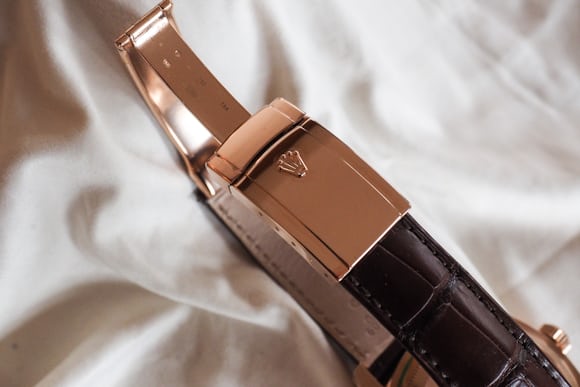
On the wrist, the impression created by the arresting visuals of the Sky-Dweller continues: they're massive, yes, but on my seven-inch wrist they were also very comfortable to wear, as both watches fit closely and remained centered on the forearm without any noticeable play. The Everose model on a strap was a very comfortable watch to wear over the course of a week, size and weight notwithstanding, and for long-term wear I think I'd prefer it to the bracelet just from a mass standpoint. (The strap is fairly thick and it distributes the mass of the watch pretty evenly, which also goes a long way toward making this a comfortable watch to wear.) However, if you are the sort of person who wants to wear this watch on a matching gold bracelet you're also probably the sort of person who is not going to be deterred by a few (well, a lot of) extra grams of gold.

Part of what makes this a comfortable watch to wear despite its mass is probably that the lugs curve down sharply enough to prevent a gap between your wrist and the back of the watch.

The Sky-Dweller is a watch with a purpose, and that purpose is to make keeping track of the date across multiple time zones as painless as possible. It's an annual calendar, dual time-zone watch in which all indications can be set by the (screw-down) crown. The unique feature of the Sky-Dweller is the "Ring Command" rotating bezel, whose position determines the function of the crown. The crown has two positions; unscrew it and pull it out to the first, and it can be used to hand-wind the movement (Rolex caliber 9001). Pull the crown out to the second position, and, depending on which position the bezel is in, you can use it to set the time, set the hour hand to local time, or set the date (there is also a neutral position for the crown as well). The annual calendar is synchronized with the hour hand, so that if you happen to be traveling between the 30th and the 1st of the next month (in a month with 30 days) the calendar will automatically skip the 31st if you set the time ahead past midnight to the new time zone. The month is indicated by a colored rectangle in one of the 12 apertures around the dial, and home time is via the 24-hour ring occupying the lower two-thirds of the dial.

Operation of the Ring Command bezel and crown is very straightforward.  The bezel has crisp detents at each position and hand setting of all three indications (time, independent hour hand, and date) was precise as well.  The Sky-Dweller, during the period I wore it, showed almost no detectable change in rate at all; in a week of daily wear (including a flight to Geneva and back) it gained about 1.5 seconds, so you won't need to handle the crown very often (once a year at the end of February, of course) but when you do, you'll have the pleasant feel of interacting with a piece of robust, well made, and well designed machinery.

The Sky-Dweller shines visually, but it shines functionally as well; in traveling with it, I found it to be an extremely enjoyable watch to use as it was designed to be used. The only potential hiccup is that there's no way of knowing, short of memorization (or manipulating the crown) which position the bezel is in, so you can find yourself inadvertently setting something you don't mean to set. I'm not sure if a solution to this is either necessary or desirable; in the abstract, it seems it would be a problem but in practice, it's pretty much a non-issue, as any of the indications can easily be set forward or backward on the off chance you change something you didn't mean to change. I suppose the worst that could happen is that you pull the crown out to the second position and find you're in time-setting mode, which would mean the seconds hand stops momentarily until you push the crown back in again. I found legibility under all conditions to be excellent (include a dark aircraft cabin during a red-eye to Geneva) despite the relatively small amount of lume present (relative, anyway, to Rolex's technical models).

The Sky-Dweller is a bit of a conundrum.  It's a technically advanced watch, and a pretty complicated one from a company not generally known for its complications. It's also a luxury watch, designed to be a pretty highly visible indication of affluence (albeit it's extremely well made, which gives it a more dignified overall vibe than not). At the same time, it's a niche enough watch that it's actually more stealth than you might think; one of those Rolexes that, despite the date cyclops, doesn't read as instantly as a Rolex as, say, a Submariner, Daytona, or Day-Date. Complicated gold watches generally don't sit in the sports watch category, yet this is also a sport watch, at least to a degree; both its size, and a number of its technical features (including that screw-down crown and a water resistance of 100 meters) seem to keep it in the sport watch category rather than the dress watch realm.  

I think the solution to some of the initial confusion you might feel when encountering the Sky-Dweller is that it really isn't a watch that inhabits any one traditional category especially: yes, it's a luxury sport watch, but unlike Rolex's other luxury sport watches, it's not a precious metal version of an existing steel model. The Sky-Dweller is not the simplest solution to telling time across two time zones quickly and easily, of course. On a certain level, if that's what you want, and you want to do it in a durable, accurate, very well made and quietly stylish mechanical watch from Rolex, well, you get a GMT Master II or an Explorer II and call it a day. But I don't think the point of the Sky-Dweller is to be the simplest answer to a particular need. The Sky-Dweller reminds me very much of another complicated Rolex: the Yachtmaster II Regatta Timer (which we went hands-on with last year). Like the Yachtmaster II, the Sky-Dweller fills a very particular niche by filling a practical need with almost hyperbolic sophistication on every level imaginable, both mechanically, and from a materials and design standpoint; and like the Yachtmaster II, it is a very particular take on a very particular complication.

I think that's what makes both watches work, and what makes them both so appealing in everyday use. They both have a pretty extroverted design, combined with a pretty idiosyncratic take on a complication with fairly specific appeal (the regatta timer on the one hand, the combination of an annual calendar and two time zones on the other). What they both are, however – and what I probably wouldn't have discovered about the Sky-Dweller without wearing it and playing with it for a week – is a tremendous amount of fun, and in a way that cuts to the core of the appeal of mechanical watches at its most basic level. The lavishness of their externals, in combination with the elaborate complexity of their mechanics relative to the practical problems they address, are essential to making them what they are; after all, to a great extent, finding joy in mechanics for its own sake is a big part of what having fun with horology is all about. As George Daniels put it in another context, "the fact that the mechanism is quite unnecessary merely adds to its charm."

The Rolex Sky-Dweller, in Everose on a strap, $39,550; in white gold on a matching white gold bracelet, $48,850. Case, 42.00mm x 14.10mm, water resistance 10 bar/100 meters.  Movement, selfwinding Rolex caliber 9001, bidirectional winding with 72 hour power reserve. Paraflex shock system with Parachrom balance spring; overcoil with free-sprung adjustable mass balance under an adjustable balance bridge.  Chronometer certified by the COSC; maximum deviation in daily rate, -2/+2 seconds per day. Ring Command bezel for selecting function of the crown in its second position; annual calendar with indication of the time in two time zones.

See our in-depth launch coverage of the Sky-Dweller by Ben Clymer, right here.

For more information, visit Rolex.com.